Abraham and Arthur Wigg purchased an existing brickworks in 1911, where the Duncan Cameron Oval is now situated in Traralgon. They had previously made bricks by hand in several different locations but installed machinery for the new works.
Thursday, July 11, 2024

Wednesday, July 10, 2024
Morwell
The Morwell Brick Tile and Pottery Co was established by James Henty & Co. in 1890 on a 12 acre site near the Morwell Station. The works had six kilns capable of burning 22,000 bricks at a time.

(with permission)
The partnership between Joseph W Corbett Brickmaker, Henry MacIntosh, Agent, H H Brown, Chemist, and A A Green, Draper, was dissolved in 1918. As well as bricks and tiles they made stoneware teapots, jugs, cheese covers, crocks, water filters, barrels, spittoons, vases, jardiniers, urns, flower pots, storage jars, bottles and demijohns.

(with permission)
Wednesday, July 3, 2024
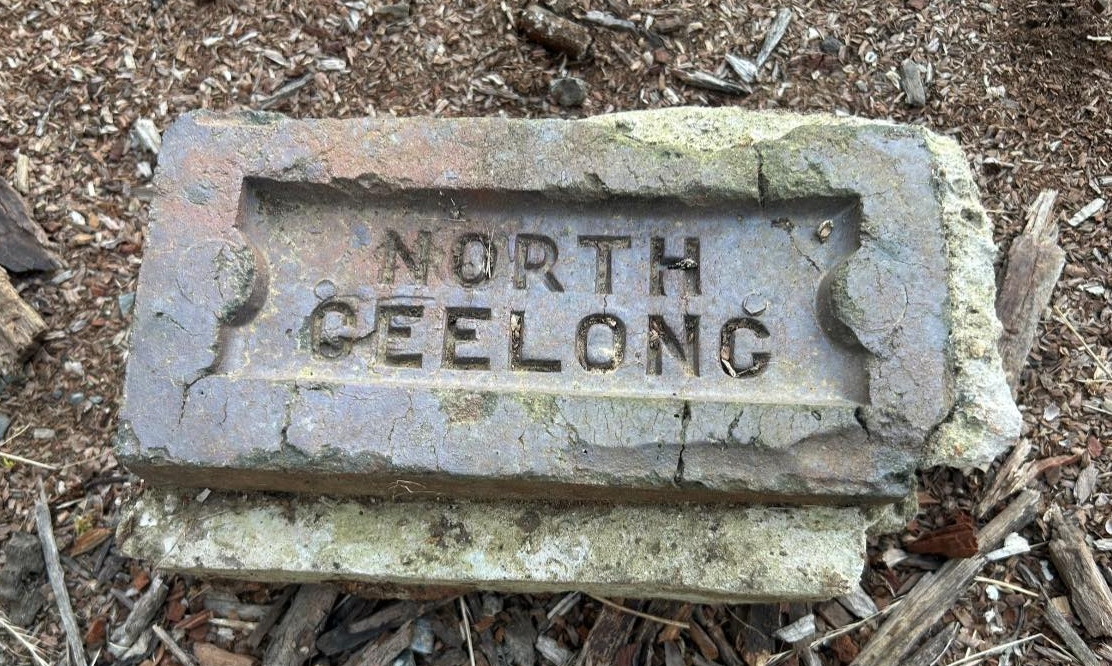
North Geelong
The North Geelong Brick Works Pty Ltd was established as a public company in 1926, with its works at the corner of Moorabool and Ryrie Streets, but a brickworks had been operating in North Geelong from at least 1911, utilising local clay to produce the 'famous Geelong blue bricks".
The blue bricks of Geelong have a name among architects and builders that ts second to. none la Victoria. . They were pleased at the announcement made by the manager of the company (Sir J. W. Cornell), yesterday when be showed them samples of the wire-cut plastic-brick made from the deposits of clay at North Geelong, and said that a large percentage of the bricks now being baked in the kilns were of that class. (Geelong Advertiser 17 May 1927, p.4)
References to the North Geelong Brick Company are common in the earlier 1920s and the works were at full production capacity around 1924 when it was reported there was a "boom in bricks". In 1925 the manager Stan Sadler, had three fingers severed by one of the machines.
Glenthompson
Glenthompson brickworks, located in Forbes St Glenthompson, was established by brothers George and Joseph Thompson of Ballarat in 1900. The Bricks are generally stamped "GLEN".

(With permission)
The works operated until recently, using clay from a pit adjacent to the brickworks,
presses
dating to 1940 and oil fired down-draught kilns.
The business was purchased by local grazier Donald Forbes and master builder Reg Williams in 1947 who made improvements and then sold out to the new company Glenthompson Brickworks Pty Ltd, Forbes staying as Managing Director. Frank Borbiro, a Hungarian refugee, took over after Forbes death and added innovations including converting the kilns to oil firing in 1956, the first in Victoria to do so.
In 1988 the works was purchased by Angora Banner Pty Ltd. The works' bricks have been used in many prominent buildings in the local area. It is included on the Southern Grampians Shire heritage overlay (HO220)
Thursday, April 11, 2024
Excelsior Brickworks.
A number of brick companies used the name Excelsior. A Sydney firm with this name was operated by the Keen brothers from 1890 to 1920 from Lang St Ashfield.

Glew and Hills were the proprietors of the Excelsior Brick Company in Frankston advertising "white and common bricks always on hand moulded bricks of every description made to order" in 1891.
Wright and Wade were owners of an Excelsior Brickworks in Dandenong Road Oakleigh in 1889 according to the Ramekin who also records John McKell as having previously been the Manager of the South Yarra Brickworks, formerly the Excelsior brickworks in Chapel Street and another Excelsior brickworks in Braybrook.
The Chapel Street works appears to the most prolific and long lived. The Argus in 1924 noted that:
For 40 years the Excelsior Brick Company has been quarrying a piece of land in Chapel street, near the Church street bridge, and proposes to continue quarrying material for the manufacture of bricks to a depth consistent with economical working. The new Melbourne High School adjoins this property, and in the event of deep quarry being made the school would be cut off from Chapel street. The hoarding on the left of the photograph of the 'late marks the Chapel street boundary of the brickworks, and on the right may be seen the new High School in course of erection.
Saturday, March 25, 2023
Frankston Brick Company
The Frankston Brick Company, was established in 1887 with works at the corner of Lee Street & Cranbourne Road. Thomas Ritchie, who established a chain of produce stores that still operates as Ritchie's Supermarkets
The company used the Frankston pier for shipping bricks to Melbourne and receiving firewood for their brick kilns on the foreshore. They excavated sand from a nearby quarry for the manufacture of lime silica bricks in the 1950s.
The company was run by Colortone Holdings from 1932 to 1961. Calsil, a Perth based company specialising in calcium silica bricks, acquired Colortone in 1966 and expanded the works, then in 1988 Boral bought out Calsil.

The opening of the plant was described in some detail:
The works of the Frankston Brick Com-
pany are now in full operation, the formal
starting of the machinery having been recently
celebrated, in the presence of a large
number of the shareholders. The company
have about 15 acres of land within
about a mile from the Frankston
railway station, and still nearer to the
pier. On this site has been erected
complete plant, including a 45 horse power
engine, will 20-in. cylinder, working a 9ft.
grinding pan, a 7ft mixing pan and a single
semi-dry machine. The elevators used are
Gill's patent, while all the other machinery is
of Fawcett's patent. The machinery was
supplied by Messrs James McEwan andCo.
The plant is capable of furnishing an output of
about 50,000 bricks per week, which can if
necessary be increased to 100,000. The com-
pany has secured a lease of the ground for
42 years at a nominal rental and free from
royalty, and the day has been tried to a
depth of 30ft. The company intend supplying
not only ordinary building bricks, but also
black, cream, and red facing bricks
Sunday, February 20, 2022
Selkirk Ballarat
Selkirk Bricks Ballarat
Scottish immigrant Robert Selkirk arrived in Australia in 1854. His son, also Robert, began making bricks by hand in 1883, using a square kiln (possibly a 'Scotch clamp') at the De Murza paddock in Allendale. Ballarat was in the throws of a building boom as a result of the wealth created by the gold rush. He installed his first brick-making machinery in 1892 and by 1900 had moved the works to to Heinz's paddock on Howitt St Ballarat where the manufacturing works and head office remains. By 1905 the first continuous kiln was introduced, enabling Selkirk to produce six million bricks per year.
The Selkirk brickworks ceased production during World War Two (1943-5) and the existing Hoffman kilns were refurbished in 1947, additional equipment installed, and the clay pit gradually enlarged. They installed the first tunnel kilns in Australia in 1962.

Two Hoffman continuous kilns stood on the edge of the clay pit. an extensive narrow gauge tramway connected the clay pit to the processing building.

Subscribe to:
Posts (Atom)